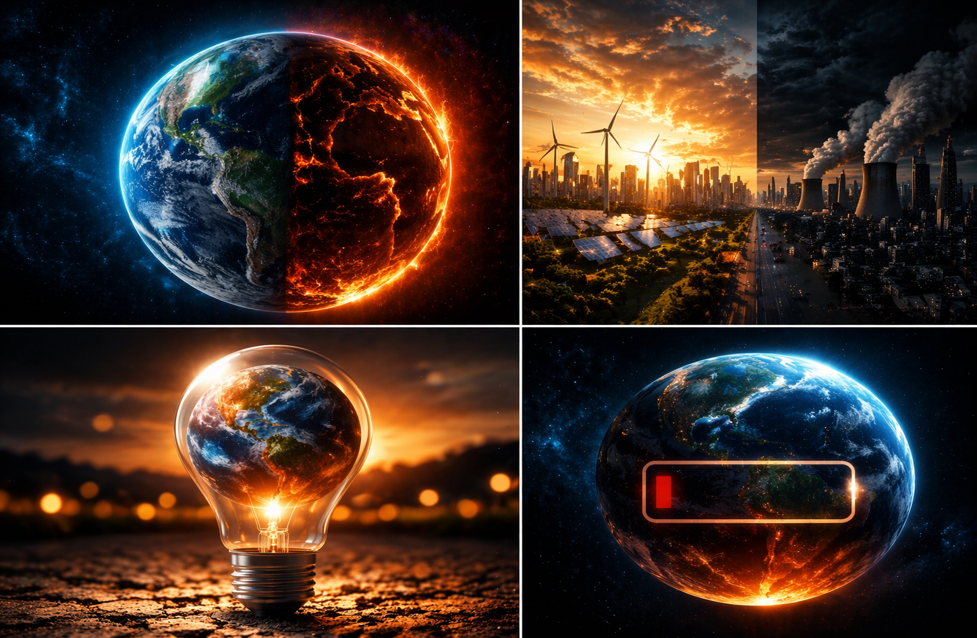
The global energy crisis is no longer just a matter of supply shortages or rising costs—it is a reflection of how modern civilization consumes, values, and often takes energy for granted. It reveals a deeper truth: a world divided by energy access and sustainability will not collapse when energy runs out, but when balance is ignored for too long.
While global systems continue to pursue renewable solutions and smarter technologies, the deeper responsibility extends to individuals whose daily choices quietly shape global demand. Energy is not only produced at scale—it is consumed in silence, in habit, and in routine.
The crisis, therefore, is not a question of supply alone, but of responsibility. A world that continues to consume without balance will not collapse suddenly, but slowly—as stability is quietly consumed from within. The issue is no longer whether the world can power its future, but whether it can survive the way it chooses to use power today.
In the end, the question is not whether humanity can generate enough energy, but whether it can learn to use it wisely before imbalance becomes irreversible. The crisis was never just about power shortages—it is about the cost of forgetting that even energy has limits.
Ultimately, overcoming the energy crisis demands more than innovation. It requires a shared shift in mindset—where progress is not measured by how much energy we consume, but by how responsibly we sustain it. Because in a finite world, survival will always belong to those who understand the value of balance before the light begins to fade.