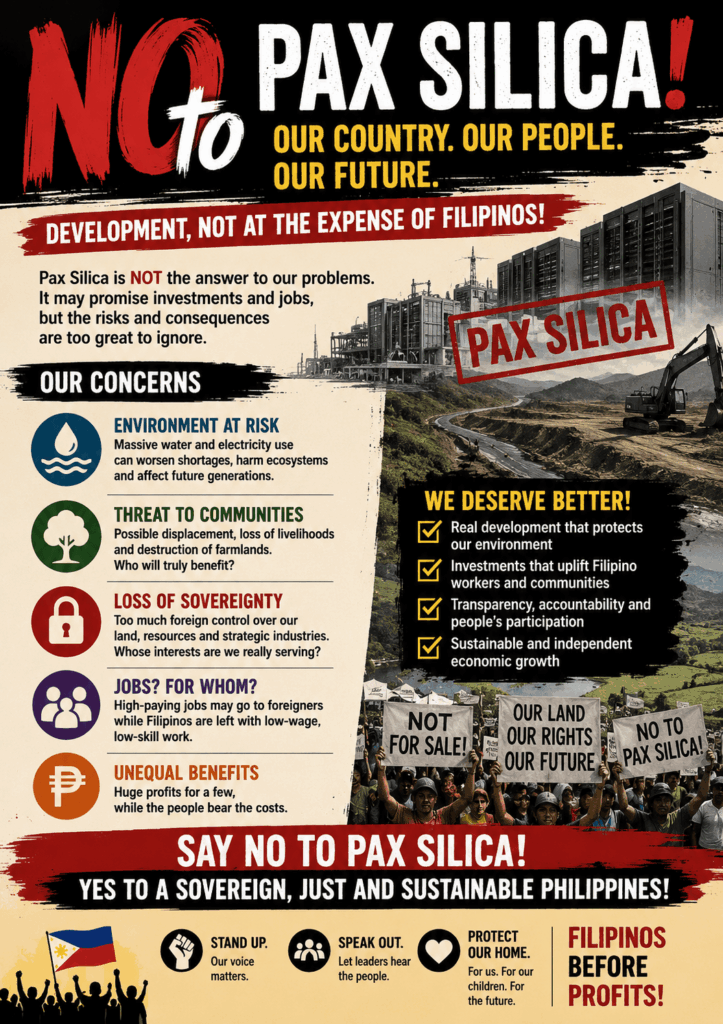
The proposed Pax Silica initiative has sparked widespread discussion in the Philippines. While supporters believe it will bring investments, jobs, and technological advancement, many Filipinos, environmental advocates, labor organizations, and civil society groups remain unconvinced. They argue that the project raises serious concerns about national sovereignty, environmental sustainability, and the country's long-term economic independence. For these reasons, many believe that the Philippines should reject Pax Silica until these issues are fully addressed.
One of the primary concerns is the country's increasing dependence on foreign powers. Critics argue that Pax Silica is closely linked to the geopolitical interests of the United States and could make the Philippines more dependent on foreign technology, investment, and strategic priorities instead of strengthening its own industries. They believe the country should pursue economic development based on national interests rather than external influence.
Environmental issues are another major point of opposition. Large AI and semiconductor facilities require enormous amounts of electricity and water to operate. Opponents worry that these demands could strain local water supplies, increase energy consumption, and negatively affect nearby communities, especially during periods of drought or power shortages. Environmental groups have called for comprehensive environmental impact assessments before any major project moves forward.
There are also concerns about the possible displacement of communities and changes in land use. Residents living near proposed development sites fear that expanding industrial zones could affect their homes, livelihoods, and agricultural lands. Many believe that affected communities should be fully consulted and fairly compensated before any project is approved.
Economically, critics question whether the promised benefits will outweigh the risks. While thousands of jobs have been projected, some argue that many of the highest-paying technical positions could ultimately go to foreign experts unless significant investments are first made in developing Filipino talent. Others worry that the Philippines may continue to provide land, labor, and natural resources while the greatest economic gains flow elsewhere.
Opponents also believe that instead of relying heavily on foreign-led initiatives, the government should prioritize strengthening local industries, supporting Filipino businesses, investing in research and innovation, modernizing agriculture, and improving education. They argue that genuine economic progress should be driven by policies that empower Filipino workers and entrepreneurs while protecting the country's natural resources and sovereignty.
In conclusion, opposition to Pax Silica is rooted in concerns over sovereignty, environmental protection, social justice, and sustainable national development. While technological advancement and foreign investment can contribute to economic growth, many Filipinos believe these opportunities should not come at the expense of the country's independence, environment, or the welfare of its people. Before moving forward, they argue that the government must ensure full transparency, meaningful public consultation, and safeguards that place the interests of the Filipino people above all else.